• Miami, Florida

  • Mon-Fri 8 am- 6pm (EST)

Lateral Lumbar Interbody Fusion (LLIF/XLIF): Indirect Neural Decompression While Sparing Posterior Paraspinal Muscles

Lateral Lumbar Interbody Fusion (LLIF/XLIF): Indirect Neural Decompression While Sparing Posterior Paraspinal Muscles

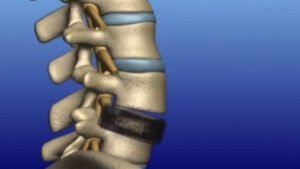
Lumbar degenerative disc disease, adult degenerative scoliosis, and degenerative spondylolisthesis (slipped vertebrae) frequently converge on a common painful pathology: disc collapse with secondary central and neuroforaminal stenosis. Historically, achieving interbody fusion and nerve root decompression required posterior approaches, such as Posterior Lumbar Interbody Fusion (PLIF) or Transforaminal Lumbar Interbody Fusion (TLIF).

Adult Degenerative Scoliosis

Adult Degenerative Scoliosis and Sagittal Balance: Modern Surgical Correction for Complex Spinal Deformity

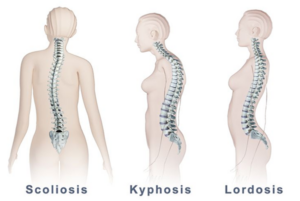
Unlike adolescent idiopathic scoliosis, which develops primarily during the pubertal growth spurt in an otherwise healthy skeleton, Adult Degenerative Scoliosis (ADS)—also termed de novo scoliosis—arises later in life as a consequence of asymmetric disc degeneration, facet joint arthrosis, and progressive osteoporosis. As intervertebral discs collapse unevenly, the structural foundation of the lumbar spine destabilizes, producing […]

Minimally Invasive Tubular Microdiscectomy

Minimally Invasive Tubular Microdiscectomy: Outpatient Pathways for Lumbar Herniated Discs and Sciatica Relief

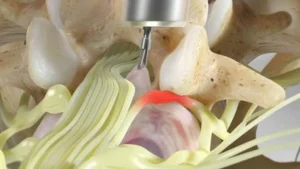
Lumbar disc herniation is the leading cause of sciatica—a sharp, burning, or electric pain radiating from the lower back through the buttock, thigh, calf, and into the foot. While the majority of lumbar disc herniations resolve within six to eight weeks with non-operative care (physical therapy, anti-inflammatory medications, and epidural steroid injections), a significant subset […]

Navigating Cervical Spondylotic Myelopathy

Navigating Cervical Spondylotic Myelopathy: Early Neurological Decompression to Halt Spinal Cord Atrophy

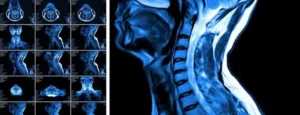
Cervical Spondylotic Myelopathy (CSM) is the most common cause of non-traumatic spinal cord dysfunction in adults worldwide. Unlike cervical radiculopathy—which involves the compression of an isolated peripheral nerve root causing sharp, radiating pain down an arm—myelopathy is a disorder of the central spinal cord itself. It is insidious, progressive, and frequently misdiagnosed in its early […]

cervical-disc-arthroplasty-vs-acdf

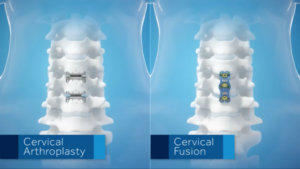
Cervical Disc Arthroplasty vs. ACDF: Motion Preservation Strategies for Cervical Radiculopathy and Disc Herniation

Cervical radiculopathy—nerve root compression in the neck causing radiating arm pain, numbness, tingling, and motor weakness—is one of the most common spinal disorders in active adults. When conservative treatments such as physical therapy, anti-inflammatory medications, and targeted epidural steroid injections fail to relieve neural impingement, surgical decompression becomes the definitive pathway to prevent irreversible nerve […]

Robotic-Assisted Minimally Invasive Spine Surgery (MISS): Sub-Millimeter Instrumentation and Faster Postoperative Mobilization

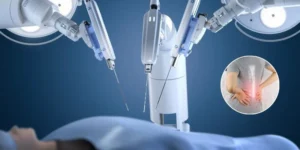
Robotic-Assisted Minimally Invasive Spine Surgery (MISS): Sub-Millimeter Instrumentation and Faster Postoperative Mobilization

For decades, spinal surgery carried a daunting reputation: long midline incisions, aggressive stripping of the stabilizing paraspinal muscles, significant intraoperative blood loss, and prolonged, painful hospital stays. Traditional “open” spinal fusion often relied heavily on two-dimensional fluoroscopy (X-ray) and manual anatomical landmarking, introducing risks of hardware malposition, neurological injury, or adjacent tissue trauma.

Ergonomics, Posture, and Tech Neck

Ergonomics, Posture, and Tech Neck: Conservative and Minimally Invasive Interventions for Degenerative Cervical Spine Care

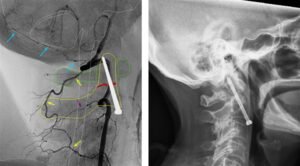
Modern daily routines require hours of forward head position spent peering down at smartphones, tablets, and desktop monitors. This widespread postural stress has accelerated a clinical phenomenon known as “Tech Neck.” While tech neck begins as muscular fatigue and ligamentous strain, chronic forward head posture dramatically alters the biomechanics of the upper body, accelerating degenerative […]

logo