
-
Miami, Florida
-
Mon-Fri 8 am- 6pm (EST)
Patients from all over the US come to see Dr. Trapana due to his world class expertise in Spine
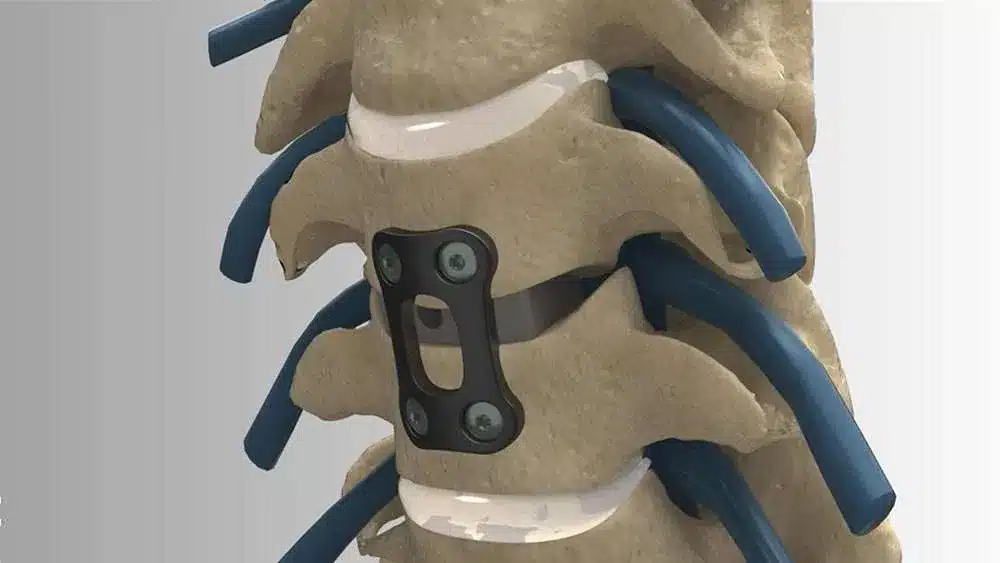
Are you experiencing chronic neck pain, weakness in your arm, or numbness? One of the most effective treatments for cervical conditions is an Anterior Cervical Discectomy and Fusion (ACDF). You are in the right place if you are looking for a spine surgeon who performs ACDF. The procedure is usually offered to patients who are suffering from herniated discs, degenerative disc disease, or spinal stenosis in the cervical (neck) region.
Anterior cervical discectomy and fusion is a surgical procedure to relieve the pressure from nerves caused by a disease affecting the cervical spine. The cervical spine comprises of vertebrae in the neck region. As an outcome of certain spine disorders, one of the intervertebral discs may damage or even rupture which can cause the disc to press against the spinal cord or the nerve roots, resulting in pain, weakness, or even numbness.
This procedure’s primary goal is to relieve symptoms, such as pain and nerve compression as well as restore stability to the cervical spine.
Dr. Trapana lists several conditions of the cervical spine for which ACDF is recommended, including:
Dr. Evan Trapana is a highly qualified and experienced spine surgeon who performs ACDF. He is widely recognized for his experience treating complicated spine conditions. He is focused on minimally invasive motion-preserving techniques, providing the most advanced treatments for various spinal disorders. His dedication to personalized care ensures that every patient is given the best possible outcome for their condition.
Dr. Trapana has completed his fellowship in Spine Surgery at the renowned University of California, San Diego Medical Center, where he mastered his skills in advanced spinal techniques such as the ACDF procedure. With his extensive knowledge, skills, and experience, Dr. Trapana uses the latest technologies and surgical methods to streamline, reduce recovery times, and enhance a patient’s general experience at both Jackson Health Systems and University of Miami.
Pre-operative Procedure:
First, Dr. Trapana will take a thorough history, perform a physical exam, and perform imaging tests (MRI, CT scan) for evaluation. Then, it is determined whether the ACDF is the appropriate procedure for your specific condition.
During the Procedure:
Usually, the procedure can take one to three hours, depending on how complicated or involved the surgery is. It is performed under general anesthesia, and a small incision in the front part of your neck is made. The cervical spine is accessed, and the disc that is damaged will be removed. The two vertebrae will be fused using a bone graft and usually stabilized using a metallic plate.
Post-operative Procedure:
After the ACDF is complete, patients may be allowed to go home on the same day. Recovery takes different lengths of time for different patients, but those recovering may resume light activity in about 2-4 weeks. Complete recovery may take several months, and physical therapy is usually recommended to restore strength and flexibility to the neck region.
Risks and Considerations:
There are always risks in every surgery, such as infection, bleeding, nerve injury, complications from anesthesia, and so forth. However, these risks are minimized with Dr. Trapana’s expertise in state-of-the-art surgery.
If you are suffering from cervical spine issues such as herniated discs, degenerative disc disease, or nerve compression, Anterior Cervical Discectomy and Fusion (ACDF) could be the solution you need to regain your quality of life. For more information, schedule your consultation with Dr. Evan Trapana today:
Phone: 305-243-6155
Office Address: Florida Spine Center, 1400 NW 12th Ave., Suite 2, Miami, FL 33136
Answer. Most patients can return to light activities after two to four weeks. Heavy work, such as lifting or manual labor, may require additional recovery time. Dr. Trapana will advise when it is safe to resume specific activities.
Answer. Fusion may take several months, and adherence to Dr. Trapana’s post-operative instructions is important. It can take 6 to 12 months for complete healing and fusion of the bones. But you might feel significant pain relief within a few weeks.
Answer. Yes, because physical therapy may facilitate recovery post-ACDF surgery by strengthening neck muscles, increasing range of motion, and accelerating recovery. He’s going to customize a rehabilitation plan according to your recovery needs.
Answer. It is recommended not to drive for 2-4 weeks after surgery. You need time to heal and regain strength and mobility. Dr. Trapana will provide specific guidance on when it is safe for you to drive again.