
-
Miami, Florida
-
Mon-Fri 8 am- 6pm (EST)
Patients from all over the US come to see Dr. Trapana due to his world class expertise in Spine
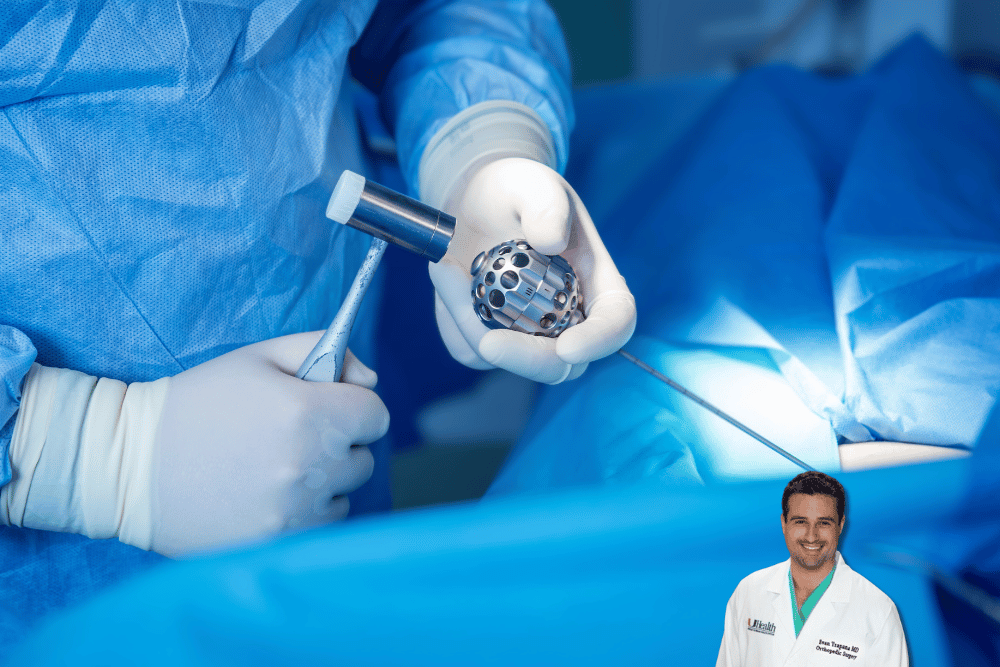
Living with chronic back or neck pain can quietly steal your quality of life—interfering with work, sleep, and daily joy. For years, spine surgery meant big incisions, prolonged hospital stays, and long recovery. Thankfully, those days are ending thanks to Endoscopic Spine Surgery.
In Miami-Dade, Dr. Evan Trapana, leading minimally invasive spine surgeon, is changing the narrative. Through endoscopic spine surgery, he’s restoring mobility and reducing recovery time using techniques that are gentle on the body yet precise and powerful.
This isn’t your grandfather’s spine surgery. Instead of cutting through muscle and tissue, surgeons like Dr. Trapana insert a tiny endoscope—a camera-equipped tube—through a small incision. The high-definition feed allows for surgical precision while preserving surrounding tissues. It feels less like a surgical strike and more like a delicate intervention. See how endoscopic spine surgery vs. open fusion compare.
The global endoscopic spine surgery market is projected to hit $9 billion by 2030, and Miami is leading the activity curve as this year unfolds.
Key drivers:
(see navigation-guided endoscopic surgery)
— including endoscopic foraminotomy for pinched exiting nerves
Spinal surgery has always been high stakes. The spine houses delicate nerves, tiny blood vessels, and bone structures that leave very little room for error. Traditionally, surgeons have relied on X-rays, CT scans, and their own experience to find their way around. That approach works, but it comes with its share of challenges—radiation exposure, long recovery times, and the need for repeat scans after surgery.
Today, a new technology is changing that narrative. Surgeons are calling it the “Google Maps” for the spine: navigation-guided endoscopic surgery.
Instead of working through a large incision, surgeons now use an endoscope, a slim tube fitted with a camera, to enter the spine through a much smaller cut. What sets navigation-assisted endoscopy apart, however, is the addition of real-time 3D mapping software.
The system builds a digital model of the patient’s spine using preoperative scans. During surgery, infrared trackers on the instruments tell the computer exactly where they are in relation to the spine. The surgeon sees both the spine and the instrument position on a screen, almost like watching a car move along a highlighted route on GPS. Learn more about image-guided navigation in spine surgery.
Smaller incisions mean less muscle damage, reduced blood loss, and quicker recovery. Patients often spend less time in the hospital and return to daily activities sooner than they would after traditional open surgery.
The spine doesn’t forgive mistakes. Even a millimeter can be the difference between a good outcome and a complication. With navigation-guided systems, surgeons can move with greater confidence, especially in difficult cases where anatomy is distorted or space is extremely tight.
Reports published in arXiv, and covered by outlets such as The Statesman and The Times of India, highlight how this approach is already improving outcomes—fewer complications, shorter hospital stays, and better patient satisfaction.
This is just the beginning. Developers are already exploring ways to integrate:
An orthopedic background gives Dr. Trapana unmatched insight into spinal mechanics, allowing him to correct issues without sacrificing structural integrity.
He performs:
When you search “best minimally invasive spine surgeon in Miami,” Dr. Evan Trapana is a standout—and with good reason.
Why he leads the pack:
An orthopedic background gives Dr. Trapana unmatched insight into spinal mechanics, allowing him to correct issues without sacrificing structural integrity.
He performs:
Equipped with:
He emphasizes same-day discharge, low-pain recovery, and personalized rehabilitation plans to help you bounce back quickly.
Take Maria from Coral Gables, Florida. She struggled with debilitating sciatica from a herniated lumbar disc for years. After months of failed conservative treatments with other doctors around South Florida, Dr. Trapana proposed a minimally invasive solution. She walked within hours and returned to her job in three weeks. “Honestly, that surgery was life-changing,” she says. “Apparently, the future of surgery is already here.”
Spine surgery doesn’t have to mean scars, hospital stays, or weeks of downtime. Thanks to endoscopic approaches—and experts like Dr. Trapana—Patients in Miami and around South Florida now have access to options that fix the problem effectively and preserve the pace of life.
If chronic back or neck pain is holding you back, it’s time to explore whether minimally invasive or endoscopic spine surgery with Dr. Evan Trapana in Miami, Florida could reintroduce you to a pain-free life. Contact their office today to schedule a consultation.