
-
Miami, Florida
-
Mon-Fri 8 am- 6pm (EST)
Patients from all over the US come to see Dr. Trapana due to his world class expertise in Spine
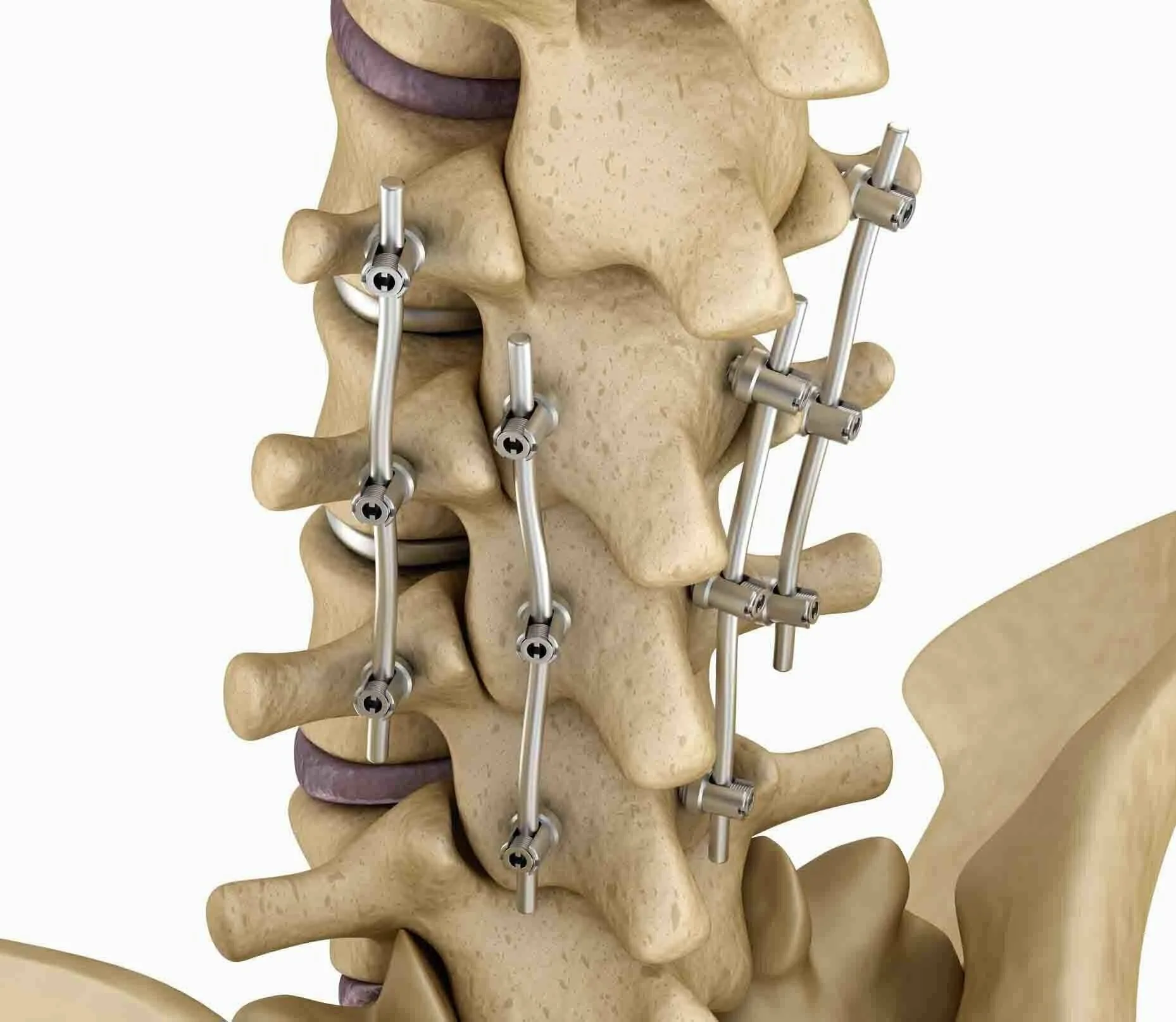
Undergoing lumbar spine surgery is a significant undertaking, and when symptoms recur or fail to improve, facing the prospect of a second operation can be daunting. Revision lumbar spine surgery—performed to correct issues from a previous operation—is inherently more complex than a primary procedure.
Re-entering a previously operated spine presents two major surgical hurdles: navigating dense, fibrous scar tissue that obscures delicate nerve roots, and managing existing hardware that may have loosened, failed to fuse, or caused biomechanical imbalance at adjacent levels.
At the University of Miami Health System and Jackson Memorial Hospital, orthopedic spine surgeon Dr. Evan Trapana specializes in complex revision lumbar spine surgery. Utilizing advanced surgical planning, 3D intraoperative navigation, and targeted, muscle-sparing approaches, Dr. Trapana safely manages scar tissue and corrects structural alignment to restore stability and function.
Revision procedures are designed to address specific structural, mechanical, or biological failures that occur after primary surgery:
┌──► 1. Pseudarthrosis (Failed bone fusion & loose screws)
├──► 2. Recurrent Disc Herniation (New protrusion at prior level)
[REVISION SURGERY TRIGGERS] ───┼──► 3. Adjacent Segment Disease (Accelerated wear at neighboring discs)
├──► 4. Sagittal Imbalance / Flatback Syndrome (Loss of natural lumbar curve)
└──► 5. Epidural Scarring & Persistent Stenosis (Incomplete nerve decompression)
Following primary spine surgery, natural wound healing forms epidural fibrosis—dense scar tissue that binds the spinal cord and nerve roots to surrounding muscle and bone. Cutting directly through scar tissue during open revision surgery carries a high risk of accidental nerve injury or dural tears (cerebrospinal fluid leaks).
Dr. Evan Trapana employs specialized surgical strategies to bypass or safely navigate dense scar beds:
[Traditional Open Revision] ──► Direct dissection through scar ──► High risk of nerve tear / dural leak
VS.
[Dr. Trapana Surgical Strategy]──► Natural anatomical bypass corridors (Transforaminal / Lateral)
│
▼
Reaches un-operated, clean tissue first to isolate and protect nerves
Rather than entering through prior surgical scars on the back of the spine, Dr. Trapana utilizes Anterior (ALIF) or Lateral (LLIF / XLIF) approaches. Entering through clean, un-operated corridors along the side or front of the abdomen avoids scar tissue entirely, providing direct access to the disc space for cage placement and height restoration.
When posterior decompression is necessary, endoscopic micro-instruments reach the pinched exit nerve through the side window (foramen). This ultra-minimally invasive corridor avoids disturbing the central scar bed while freeing the nerve root.
Correcting loose hardware or spinal imbalance requires real-time accuracy to protect neurological structures and secure long-term fusion success.
[Pre-Op 3D CT Reconstruction] ──► Map existing hardware & bone quality
│
▼
[Real-Time 3D Navigation] ──► Sub-millimeter guidance for hardware removal & revision screws
│
▼
[Structural Interbody Grafting]──► Restores disc height, lordosis, and alignment
| Surgical Metric | Primary Lumbar Surgery | Dr. Evan Trapana Revision Protocol |
| Surgical Field | Clean anatomical tissue planes | Dense epidural scar tissue (fibrosis) |
| Anatomical Approach | Standard posterior midline approach | Anatomical bypass corridors (ALIF, Lateral, Endoscopic) |
| Hardware Considerations | Standard screw sizing | Revision screw sizing & 3D navigated placement |
| Dural Leak Risk Profile | Standard baseline risk | Controlled via high-definition magnification & clean entry |
| Surgical Goal | Focal nerve decompression or fusion | Comprehensive hardware re-alignment & nerve release |
Revision lumbar spine surgery demands specialized expertise, detailed diagnostic evaluation, and modern surgical techniques. By utilizing un-operated anatomical corridors, advanced scar management, and 3D intraoperative navigation, Dr. Evan Trapana offers patients across Miami and South Florida a clear, safe pathway toward correcting failed prior surgeries and achieving lasting relief.