
-
Miami, Florida
-
Mon-Fri 8 am- 6pm (EST)
Patients from all over the US come to see Dr. Trapana due to his world class expertise in Spine
Undergoing spinal surgery is a major decision, undertaken with the clear expectation of relief from debilitating back pain or leg pain. For the majority of patients, modern spine procedures deliver excellent outcomes. However, when persistent, recurring, or newly developed back or leg pain continues months after surgery, patients can feel frustrated and demoralized. This complex clinical scenario is known as Failed Back Surgery Syndrome (FBSS) or Post-Laminectomy Syndrome.
FBSS is not a single disease or a sign that a surgical mistake was made. Rather, it is an umbrella term describing persistent or recurring pain following one or more spinal operations. Treating FBSS requires moving away from generic, repeat surgeries and toward a precise, systematic diagnostic framework to uncover the exact underlying pain generator.
Rating: 3.3
🏥 Hospital
Open· Closes 5:00 PM Tue
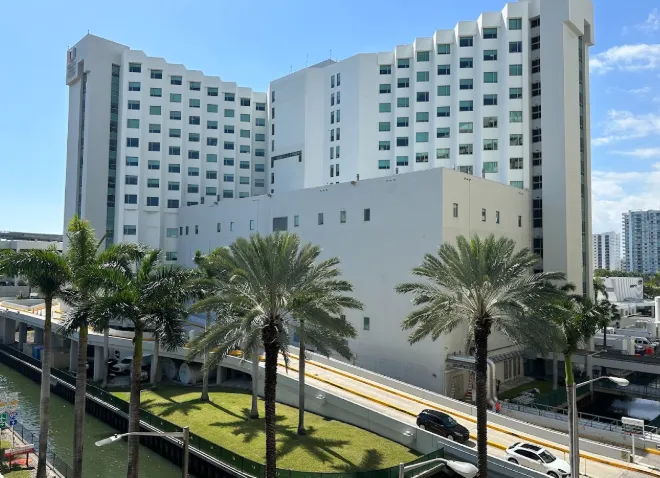
At the University of Miami Health System (UHealth Tower Click to open side panel for more information and Jackson Memorial Hospital Click to open side panel for more information , orthopedic spine specialist Dr. Evan Trapana utilizes advanced diagnostic pathways to evaluate complex post-operative spine cases. By distinguishing between structural failure, nerve scarring, adjacent level strain, and non-spinal pain sources, Dr. Trapana offers patients across South Florida targeted, ultra-minimally invasive and motion-conscious treatment options.
To treat recurrent post-operative pain effectively, clinicians must identify the specific anatomical or biomechanical cause. Common contributors to FBSS include:
┌──► 1. Epidural Fibrosis (Dense scar tissue binding nerve roots)
├──► 2. Recurrent Disc Herniation (New disc material at treated/adjacent level)
[PRIMARY DRIVERS OF FBSS] ─────┼──► 3. Pseudarthrosis (Incomplete bone fusion after hardware placement)
├──► 4. Adjacent Segment Disease (Accelerated wear above/below fusion)
└──► 5. Sacroiliac Joint Dysfunction / Diagnostic Mismatch
As natural tissue heals following open back surgery, fibrous scar tissue forms within the spinal canal. In some patients, dense epidural fibrosis can encase and tether delicate spinal nerve roots, pulling on the nerve during movement and triggering persistent burning or radiating leg pain.
Even after a successful microdiscectomy, remaining intervertebral disc material can re-herniate through the prior annular tear months or years later, exerting fresh mechanical pressure on the adjacent nerve root.
In fusion procedures, the objective is for adjacent vertebrae to fuse into a single solid bone. If the bones fail to heal together—a condition known as pseudarthrosis or non-union—micro-motion across the hardware can cause severe axial back pain and instrument loosening.
Fusing a segment of the spine eliminates its natural movement, transferring increased biomechanical stress to the discs and facet joints directly above or below the fused level. Over time, this accelerated mechanical strain can lead to secondary disc breakdown or spinal stenosis.
Occasionally, persistent post-operative pain stems from a pain generator that was not fully addressed during the initial procedure, such as Sacroiliac (SI) Joint dysfunction or hip osteoarthritis mimicking lumbar spine pain.
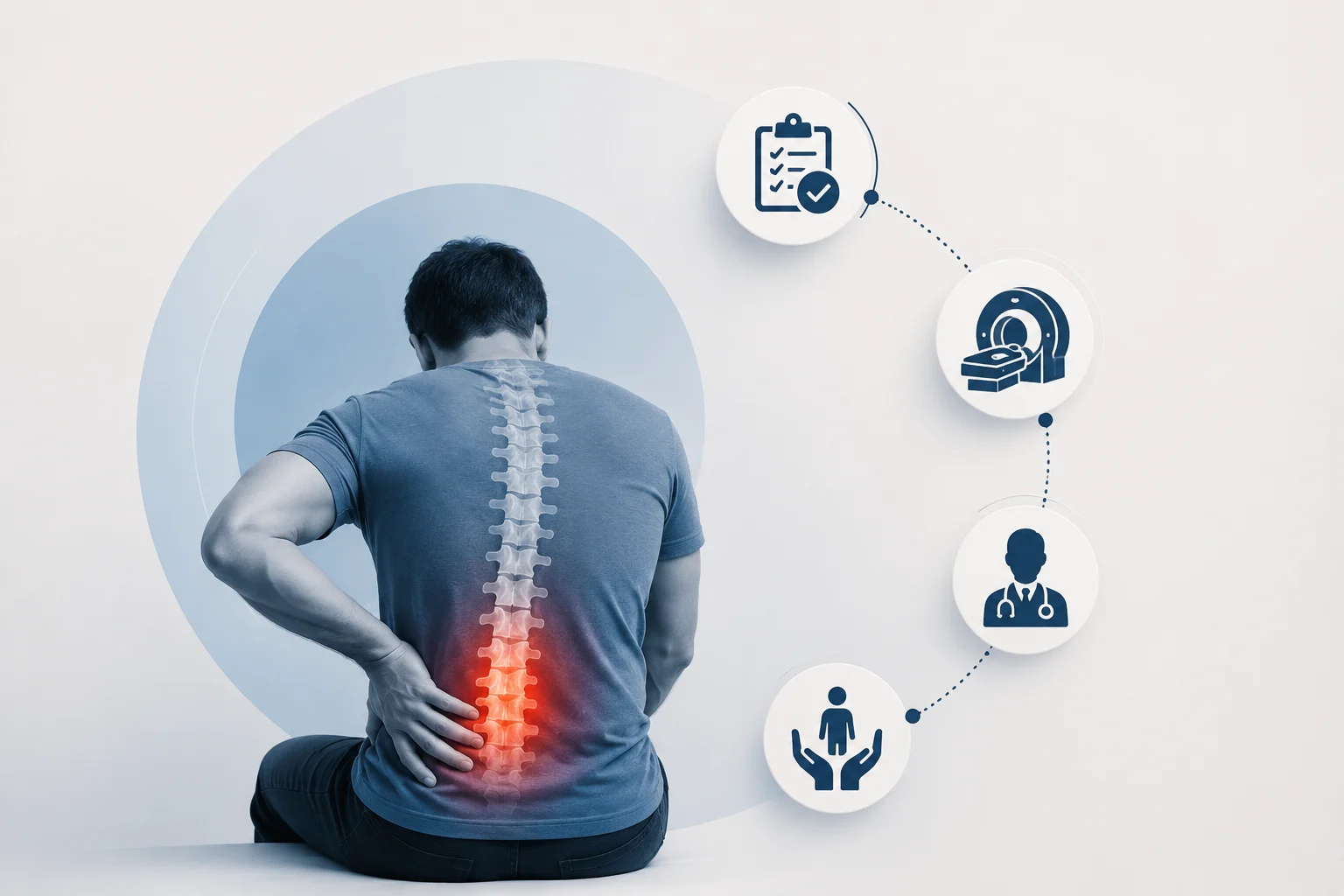
Evaluating a patient with persistent post-surgical pain requires a thorough, multi-step diagnostic workup rather than rushing into repeat open surgery:
[Comprehensive History & Physical] ──► Differentiate Axial Back Pain vs. Radiating Leg Pain
│
▼
[Contrast MRI & Dynamic X-Rays] ──► Gadolinium Contrast Distinguishes Scar vs. Recurrent Disc
│
▼
[Diagnostic Diagnostic Injections] ──► Targeted Nerve / Joint Blocks Confirm Pain Generator
Differentiating between dominant axial back pain (dull, aching lower back pain) and dominant radicular leg pain (sharp, shooting pain down the leg) narrows the diagnostic focus to either structural instability/joint degeneration or ongoing nerve compression.
Standard MRI scans cannot always distinguish between soft tissue scar formation and a recurrent disc herniation. Utilizing Gadolinium contrast MRI, scar tissue enhances (lights up) immediately with contrast due to its blood supply, while recurrent disc material does not, providing clear diagnostic differentiation. Flexion/extension X-rays assess whether hardware remains stable or if micro-instability is present.
Targeted, image-guided nerve root blocks, facet joint injections, or SI joint injections serve as essential diagnostic tools. If a temporary anesthetic injection directly into a specific nerve corridor provides immediate, short-term pain relief, it confirms that location as the primary pain generator.
| Diagnostic / Treatment Factor | Standard Repeat Open Surgery | Dr. Evan Trapana’s Targeted Precision Protocol |
| Diagnostic Strategy | Empiric extension of previous fusion | Contrast MRI & targeted diagnostic nerve blocks |
| Surgical Approach | Re-opening prior large scar corridors | Ultra-minimally invasive / endoscopic corridors |
| Scar Tissue Management | Aggressive dissection near nerves | Targeted anatomical bypass via natural foraminal windows |
| Spinal Mobility | Extended fusion & motion loss | Motion preservation prioritized where structurally viable |
| Recovery & Hospital Stay | Multi-day stay; prolonged recovery | Outpatient or short-stay pathways |
Once the precise pain generator is identified, treatment is tailored to the underlying cause:
Persistent or recurring pain after spine surgery does not mean you are out of options or destined to live with chronic discomfort. By using advanced diagnostic imaging and targeted, minimally invasive treatment pathways, Dr. Evan Trapana helps patients across Miami and South Florida find clarity and lasting relief from Failed Back Surgery Syndrome.