
-
Miami, Florida
-
Mon-Fri 8 am- 6pm (EST)
Patients from all over the US come to see Dr. Trapana due to his world class expertise in Spine
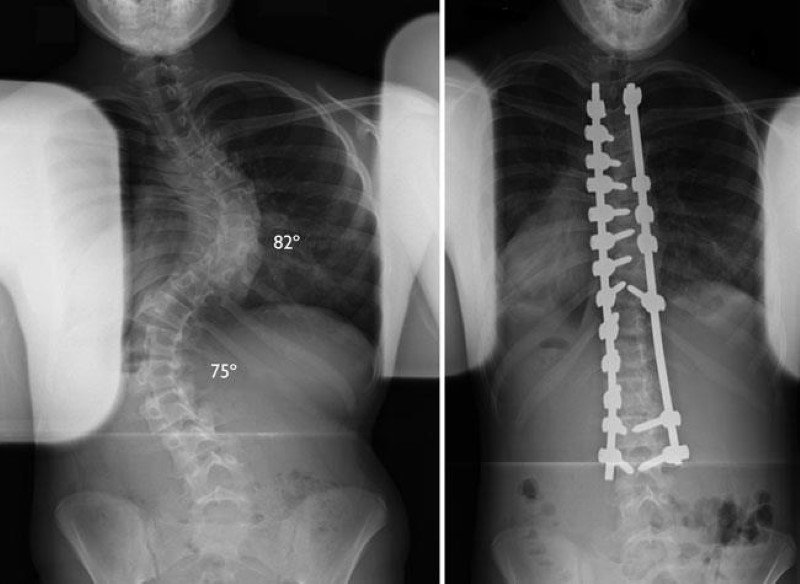
If a spine surgeon in Miami has recommended surgery for scoliosis, you’re likely facing three big questions: what will the surgery actually involve, how much will it cost, and how long before life gets back to normal. This guide answers all three with real numbers — from the $60,000 to $175,000+ national price range to the month-by-month recovery timeline most patients follow — so you can walk into your consultation prepared instead of guessing.
Idiopathic scoliosis affects roughly 1% to 4% of adolescents worldwide, but only a small fraction ever need surgery. Most curves are managed with observation or bracing. Surgery becomes the recommended path once a curve crosses a specific threshold — and understanding that threshold, along with what the procedure and recovery actually involve, makes the decision far less overwhelming.
Scoliosis surgery aims to straighten and stabilize an abnormally curved spine, halting further progression. The most common procedure is spinal fusion, in which the curved vertebrae are realigned and permanently joined using metal rods, screws, and bone graft so they heal into a single, solid segment of bone.
The core goals of scoliosis surgery are to:
| Statistic | What the Data Shows |
|---|---|
| Prevalence of idiopathic scoliosis | Affects about 1% to 4% of adolescents worldwide |
| Typical surgical threshold | Curves of 45° to 50°+ (Cobb angle) in growing patients |
| Spinal fusions performed annually (U.S.) | Estimated 38,000+ per year |
| Average surgery length | 4 to 8 hours, depending on curve size and levels fused |
| Average hospital stay | 3 to 7 days (average around 5.6 days) |
| National average cost | Roughly $60,000 to $175,000+ depending on complexity and region |
| Curve correction goal | 50% or more reduction in curvature |
| Time to solid fusion | 6 to 12 months for full bone healing |
| Major nerve injury risk | Well under 1% |
Not every curve requires surgery — most don’t. Surgery is generally recommended for:
Curves between 40° and 50° in a still-growing child fall into a gray area, where the decision depends on flexibility, remaining growth, and risk factors discussed individually with your surgeon. Diagnosis relies on X-rays, MRI when nerve involvement is suspected, and a physical exam evaluating posture, shoulder and hip symmetry, and spinal flexibility.
Spinal fusion remains the gold-standard procedure, but the right approach depends on the patient’s age, curve location, curve flexibility, and overall health.
| Procedure | Best For | How It Works |
|---|---|---|
| Spinal fusion | Teenagers and adults with moderate-to-severe curves | Curved vertebrae are realigned and permanently fused using rods, screws, and bone graft |
| Vertebral body tethering (VBT) | Still-growing children with moderate, flexible curves | A flexible cable is anchored to the spine, correcting the curve while preserving motion |
| Osteotomy | Adults or severe, rigid deformities | Bone is removed or reshaped to correct curves that are too stiff for standard fusion alone |
| Hemivertebra removal | Congenital scoliosis from an irregularly shaped vertebra | The malformed vertebra is removed and adjacent bones are joined |
| Minimally invasive (endoscopic) fusion | Select thoracic curves in appropriate candidates | Fusion performed through several small incisions using an endoscope and fluoroscopic guidance instead of one long incision |
Minimally invasive approaches typically mean less blood loss, less post-operative pain, and a shorter hospital stay — but they’re not right for every curve. Thoracolumbar and lumbar curves, double thoracic curves, and cases with significant kyphosis or lung involvement usually still call for an open procedure. Ask your surgeon which category your curve falls into, and whether robotic-assisted spine surgery is available for your case in Miami — this technology can improve screw placement accuracy in complex fusions.
Pre-operative preparation typically includes:
| Recovery Phase | What’s Typical |
|---|---|
| First 2 weeks | Home rest, no school or work, sponge baths only, no heavy lifting or bending |
| 4 to 6 weeks | Return to school or light work; driving usually resumes once off pain medication |
| First 6 months | No strenuous activity, no lifting heavier than a dinner plate, no running or jumping |
| 6 to 8 months | Follow-up X-rays; if healing well, low-impact activities like swimming are allowed |
| 8 to 10 months | Closed-chain exercises (e.g., stationary cycling) typically introduced |
| 10 to 12 months | Running, jumping, and solo sports generally permitted |
| 12+ months | Final follow-up and X-rays; most patients cleared for unrestricted activity once fusion is solid |
Full bone fusion typically takes 6 to 12 months, though the spine feels noticeably straighter and more stable within the first few weeks. Most patients report their back pain is better a year after surgery than it was beforehand.
Like any major surgery, scoliosis surgery carries risks — though serious complications are uncommon:
| Complication | Approximate Risk / Notes |
|---|---|
| Major nerve injury (including paralysis) | Well under 1%; continuous nerve monitoring during surgery reduces this risk further |
| Pseudarthrosis (fusion doesn’t fully take) | Up to ~1% in children, somewhat higher in adults |
| Infection | Reduced with pre-op antibiotics and sterile surgical technique |
| Bleeding requiring transfusion | Managed with cauterization and blood-recycling devices during surgery |
| Hardware issues (broken/loosened rods or screws) | Rare; usually associated with incomplete fusion |
Scoliosis surgery is one of the more expensive orthopedic procedures, and costs vary widely by region, hospital, and complexity. For a broader look at how this compares to other spine procedures, see our guide to spine surgery types, recovery time, and cost, and our detailed breakdown of the cost of spine surgery in the U.S.
| Cost Component | Approximate Range |
|---|---|
| Total cost (full thoracic-to-lumbar fusion) | $60,000 – $175,000+ |
| Hospital/facility fees | $20,000 – $50,000 |
| Surgeon fees | $5,000 – $15,000 |
| Anesthesia | $1,000 – $3,000 |
| Implants and hardware (rods, screws) | $5,000 – $20,000 (often the single largest cost category) |
| Pre- and post-op care (imaging, PT, medications, follow-ups) | $3,000 – $10,000 |
National research on idiopathic scoliosis fusion found average per-patient charges ranging from roughly $103,000 in the South to over $150,000 in the West, reflecting significant regional variation. Hardware alone can account for close to 30% of total surgical cost. Complications, longer hospital stays, or more complex multi-level fusions push costs toward the higher end of the range.
Most major insurance providers, including Medicare and Medicaid, cover scoliosis surgery when it’s deemed medically necessary rather than cosmetic. Florida patients dealing with a spine injury tied to an accident should also review our guide to navigating Florida PIP for a spine injury, which explains how personal injury protection coverage may apply.
To improve your chances of approval:
Given the cost and long recovery involved, choosing the right surgeon matters as much as choosing the right procedure. Review our guide on why board certification matters when choosing a spine surgeon, and if you already have a treatment plan from another provider, our article on getting a second opinion from a Miami spine surgeon outlines what questions to ask before committing to surgery. Once surgery is scheduled, our guide to preparing your home for spine surgery recovery walks through the practical setup that makes the first two weeks at home easier.
Surgery is generally recommended once a curve reaches 45° to 50° or more, since curves this size tend to keep progressing even after growth stops. Curves between 40° and 50° in growing children are evaluated case by case.
Total costs typically range from $60,000 to $175,000 or more, depending on the complexity of the curve, number of vertebrae fused, hospital, and region of the country. Implants and hardware alone often account for close to 30% of the bill.
Most patients stay 3 to 7 days, with an average of around 5 to 6 days, depending on how quickly they progress with walking and pain control.
Most patients return to school or light work activities within 4 to 6 weeks. Full return to sports and unrestricted activity typically takes 6 to 12 months, once solid fusion is confirmed on X-ray.
As with any major surgery, there are risks, including infection, bleeding, and rare nerve injury — the risk of major neurological injury is well under 1%. Continuous nerve monitoring during the procedure helps catch and address problems in real time.
Spinal fusion permanently joins the curved vertebrae into one solid, immobile segment and is considered the gold-standard, most predictable option. VBT uses a flexible tether instead of fusing bone, preserving some spinal motion, but it’s generally reserved for growing children with flexible curves, and long-term outcome data is still more limited than for fusion.
Many patients experience more pain immediately after surgery, but most report their back pain improves significantly compared to before surgery within the first year. Some residual, occasional discomfort is normal — as it is for anyone, with or without scoliosis.
Yes, most insurers — including Medicare and Medicaid — cover scoliosis surgery when it’s medically necessary. Approval typically requires documentation of curve severity, progression, and evidence that non-surgical treatments were tried first.