
-
Miami, Florida
-
Mon-Fri 8 am- 6pm (EST)
Patients from all over the US come to see Dr. Trapana due to his world class expertise in Spine
As the spine ages, long-term wear and tear on intervertebral discs and facet joints can cause more than localized back pain. In many adults, uneven degeneration leads to Adult Degenerative Scoliosis (ADS)—a complex spinal condition where the normally straight column develops a side-to-side curvature (often combined with a loss of natural lumbar lordosis, or “flatback” syndrome).
Unlike adolescent scoliosis, which primarily stems from idiopathic growth patterns during puberty, adult degenerative scoliosis develops secondary to asymmetric disc collapse, joint arthritis, and vertebral slippage (spondylolisthesis). Patients frequently experience a double burden: severe axial back pain from mechanical breakdown and radiating leg pain, numbness, or weakness (neurogenic claudication) caused by narrowed nerve canals.
At the University of Miami Health System and Jackson Memorial Hospital, orthopedic spine surgeon Dr. Evan Trapana utilizes advanced, multi-planar reconstructive pathways. By combining targeted neural decompression with computer-guided alignment and minimally invasive lateral or anterior fusion techniques, Dr. Trapana corrects complex spinal deformities, restores sagittal balance, and helps patients regain erect posture and mobility.
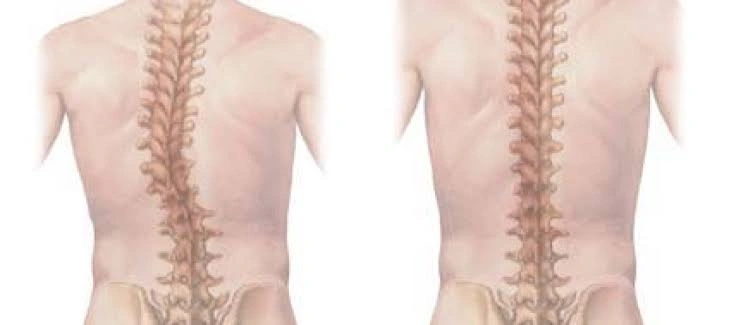
Evaluating adult spinal deformity requires assessing the column in three dimensions:
[Coronal Plane (Front View)] ──► Asymmetric Disc Collapse ──► Side-to-Side Curvature (Scoliosis)
│
▼
[Sagittal Plane (Side View)] ──► Loss of Lumbar Lordosis ──► Forward Pitch (“Flatback” / Stooped Posture)
│
▼
[3D Reconstructive Surgery] ──► Restores Lordosis, Levels Coronal Tilt, & Unpinches Nerves
Degeneration rarely occurs symmetrically. As one side of a lumbar disc collapses faster than the other, the overlying vertebra tilts, initiating a scoliotic curve. This asymmetric collapse causes pinched nerves on the concave (compressed) side of the curve.
Proper sagittal balance allows a person to stand upright without expending excessive muscular energy. When aging discs lose height, the lumbar spine loses its natural inward curve (lordosis). Patients unconsciously flex their knees and tilt their pelvis back to compensate, leading to severe fatigue, stooped posture, and chronic muscular strain.
Correcting adult degenerative scoliosis requires balancing nerve decompression with global alignment. Dr. Trapana employs tailored, multi-stage reconstructive pathways:
Traditional deformity surgery required extensive posterior bone removal to unpinch nerves. Modern reconstructive pathways utilize natural anatomical corridors through the side (Lateral Lumbar Interbody Fusion – LLIF) or front (Anterior Lumbar Interbody Fusion – ALIF):
Securing a corrected spinal curve requires stable fixation. Utilizing intraoperative 3D navigation and robotic guidance, Dr. Trapana places pedicle screws with sub-millimeter precision. This technology lowers the risk of hardware malposition in severely rotated or osteoporotic vertebrae, securing the newly reconstructed curve.
For severe, fixed nerve compression that does not fully respond to indirect height restoration, targeted micro-laminotomies are performed to directly free the affected nerve roots while preserving as much stabilizing facet joint tissue as possible.
| Surgical Metric | Traditional Wide Open Decompression | Dr. Evan Trapana’s Advanced Reconstructive Pathway |
| Primary Focus | Localized nerve relief only | Global 3D alignment + comprehensive nerve relief |
| Approach Corridor | Long posterior back incision | Minimally invasive lateral / anterior + targeted posterior |
| Sagittal Lordosis | Often worsens “flatback” syndrome | Actively restores natural lumbar curvature |
| Soft Tissue Impact | Extensive muscle stripping along the spine | Muscle-sparing corridors; reduced blood loss |
| Long-Term Stability | High risk of curve progression | Stable, multi-planar reconstruction |
Surgical reconstruction for adult scoliosis is considered when non-surgical measures (physical therapy, core stabilization, targeted epidural injections) no longer manage pain or functional loss. Ideal candidates include adults experiencing:
Living with adult degenerative scoliosis, stooped posture, or severe nerve pain does not mean you are out of options. Through advanced, motion-conscious, and multi-planar reconstructive spine surgery, Dr. Evan Trapana offers patients across Miami and South Florida a comprehensive pathway toward erect posture, relieved nerve pressure, and restored daily independence.
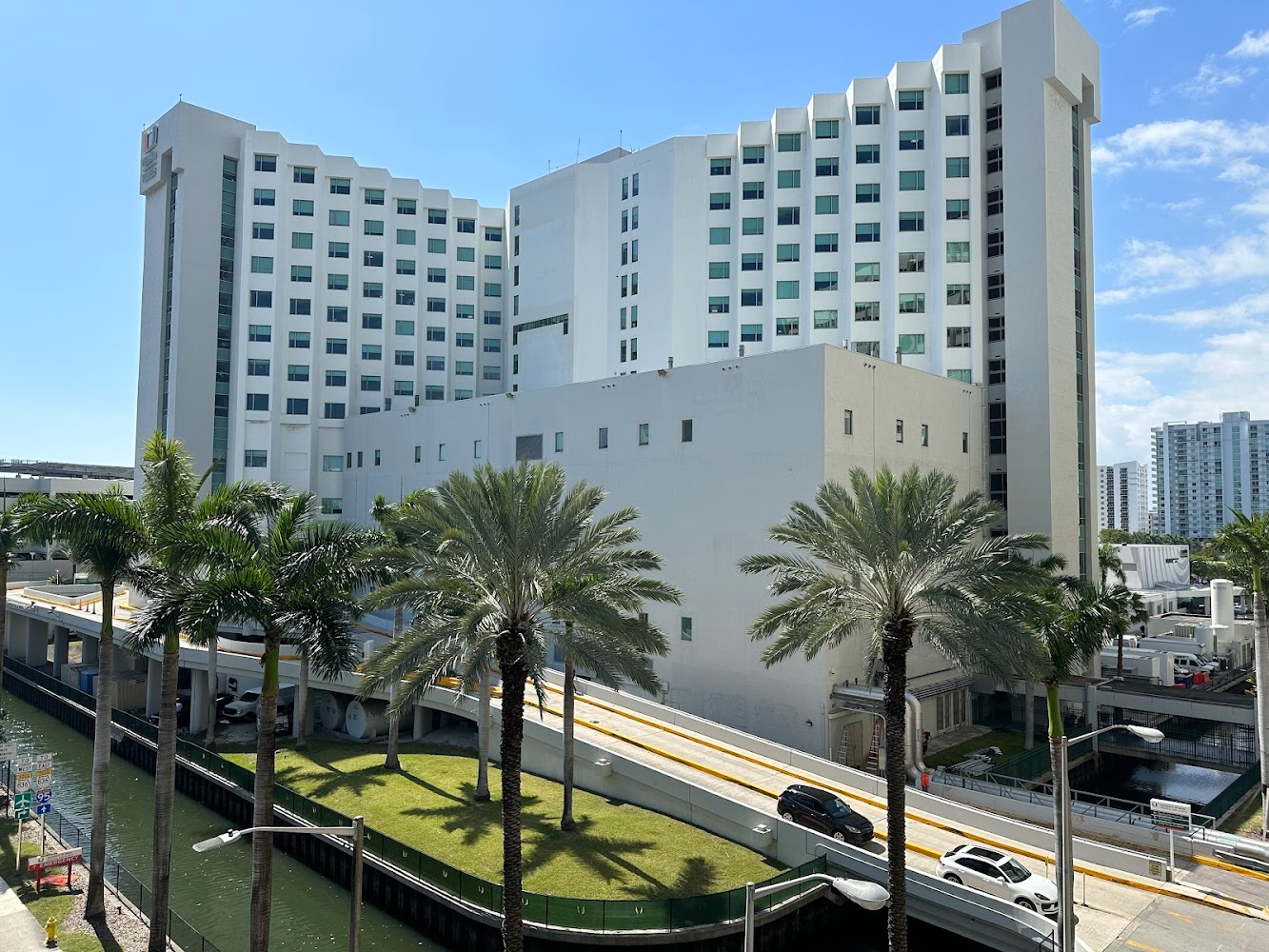
UHealth Tower
3.3
🏥 Hospital
Open· Closes 5:00 PM