-
Miami, Florida
-
Mon-Fri 8 am- 6pm (EST)
Patients from all over the US come to see Dr. Trapana due to his world class expertise in Spine
Spinal stenosis is a prevalent, progressive condition that impacts the daily life and mobility of millions of individuals. It is characterized by the narrowing of the spinal canal, which pinches the spinal cord and nearby nerve roots, resulting in chronic neck, back, or radiating extremity pain. Left untreated, severe stenosis can lead to progressive weakness, numbness, and difficulty walking. Emphasizing the importance of choosing the right back pain treatment tailored to your unique condition is essential to preserving your long-term mobility.
At The Florida Spine Center, Dr. Evan Trapana is recognized as a trusted provider of advanced, motion-preserving spine care. Specializing in minimally invasive and robotic techniques, Dr. Trapana helps patients throughout South Florida navigate complex spinal conditions. When non-surgical choices no longer provide relief, understanding advanced decompression surgeries—specifically the comparison between a laminoplasty and a laminectomy—is key to choosing the correct pathway to recovery. Let’s explore how these procedures function, how they contrast, and what you can expect during your recovery timeline.
Spinal stenosis is primarily an age-related degenerative disease, but narrowing of the spinal canal and the resulting nerve pressure can stem from several conditions:
There is no one-size-fits-all answer when treating spinal narrowing. The ideal low back pain treatment or cervical protocol relies on several clinical parameters:
Dr. Trapana ensures patients transition smoothly through standard non-surgical treatments before considering advanced decompression options.
Physical therapy is a foundational step in your care path. A structured back pain therapy treatment plan focuses on strengthening the core, abdominal, and deep stabilizing muscles of the spine. Improving flexibility and muscle tone helps reduce the mechanical load placed on tight spinal joints, opening up micro-space within the canal.
Non-steroidal anti-inflammatory drugs (NSAIDs) and targeted nerve medications are frequently utilized to reduce swelling around compressed nerve endings. This provides a temporary window of physical comfort, allowing patients to actively participate in rehabilitation.
In mild cases of spinal narrowing, gentle manual adjustments can assist in optimizing alignment, alleviating asymmetric wear on the spinal joints and offering short-term symptomatic relief.
Epidural steroid injections or selective nerve blocks deliver powerful anti-inflammatory medication directly to the pinched nerve roots under precise imaging guidance. These targeted treatments are excellent for controlling acute radiating pain.
When conservative measures fail and spinal stenosis severely limits daily mobility or threatens nerve function, surgical decompression is required. This involves physically removing or altering bone and ligament structures to permanently open the compressed spinal canal. The two primary methods for multi-level compression are laminoplasty and laminectomy.
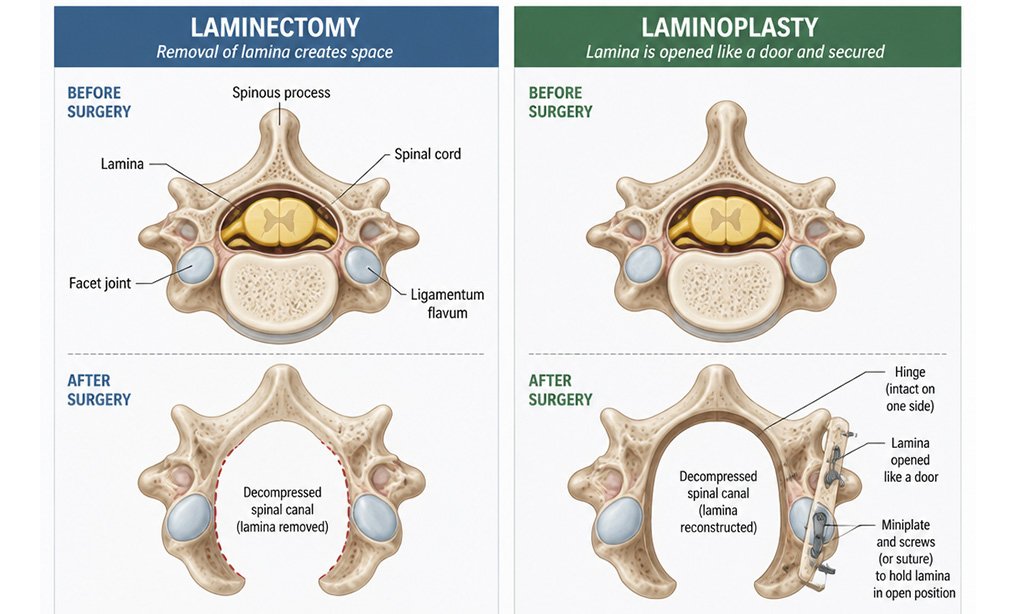
A laminoplasty is a specialized, motion-preserving procedure primarily performed in the cervical spine (neck). Instead of removing the protective bony roof of the spinal canal (the lamina), the surgeon creates a hinge on one side of the bone and opens it like a door. This instantly widens the canal, relieving pressure on the spinal cord. The “door” is then held securely open using tiny titanium plates and screws.
Because the natural bone structures and muscle attachments remain mostly intact, a laminoplasty retains spinal stability and guards against future structural collapse without requiring a fusion.
A laminectomy involves the complete removal of the lamina (the bony roof) at the affected levels of the spine. By removing this bone along with any thickened ligaments or bone spurs, the spinal canal is fully opened from the back, giving the compressed nerves immediate room to rest.
While highly effective at relieving severe pressure, completely removing the roof can sometimes destabilize the spine, especially in the lower back or in patients with pre-existing alignment issues. To prevent future slippage, a laminectomy is often combined with a spinal fusion procedure.
The choice between continuing conservative therapy or moving forward with surgery comes down to functional balance. Non-surgical choices provide a faster initial recovery and carry minimal risk, making them ideal for managing mild-to-moderate stenosis symptoms. However, they cannot physically alter a narrowed bony canal.
Advanced decompression surgeries offer a definitive, structural cure for severe, life-altering nerve compression. While surgical recovery requires dedicated time, it provides the only reliable mechanism to halt progressive nerve damage and permanently restore long-term mobility.
Comprehensive rehabilitation at floridaspine is customized to support your specific healing timeline:
Selecting between a laminoplasty and a laminectomy requires a comprehensive evaluation by an orthopedic spine specialist who deeply understands spinal mechanics. Dr. Evan Trapana utilizes high-resolution diagnostics—including MRIs and dynamic X-rays—to assess the precise degree of your narrowing and your baseline spinal stability.
At floridaspine, your treatment plan is built exclusively around your specific anatomy, lifestyle demands, and active recovery goals.
Spinal stenosis is often a silent contributor to progressive nerve damage. You should seek an evaluation at floridaspine if you experience:
Living with the limitations of spinal stenosis can make your world feel smaller, but modern spine care provides highly advanced, effective solutions. Whether your condition is best managed through targeted physical therapy, a motion-preserving laminoplasty, or a definitive laminectomy decompression, early and precise intervention is the best path to safeguarding your nerves.
Under the leadership of Dr. Evan Trapana, our team is committed to delivering the highest caliber of personalized orthopedic care in South Florida.
CTA: Contact floridaspine today for expert back pain treatment and personalized care.