-
Miami, Florida
-
Mon-Fri 8 am- 6pm (EST)
Patients from all over the US come to see Dr. Trapana due to his world class expertise in Spine
Neck pain is common.
Pain shooting down the arm? Also common.
What’s not common is knowing when those symptoms are something you can ride out — and when they’re a sign of real nerve compression that shouldn’t be ignored.
That’s where cervical radiculopathy comes in.
Patients don’t usually walk into the office saying that term. They come in because their neck hurts, their shoulder burns, or their fingers feel weak or numb. Some have already tried physical therapy. Others were told to “wait it out.” Many are frustrated because no one has explained what’s actually happening.
This is exactly the type of scenario Dr. Evan Trapana sees regularly — and where careful evaluation matters more than rushing to treatment.
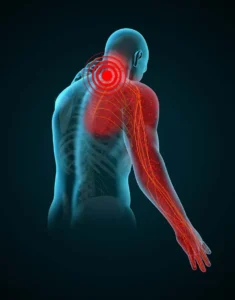
Cervical radiculopathy simply means a nerve in the neck is being irritated or compressed.
That compression often comes from:
The symptoms usually follow a pattern:
The key point Dr. Trapana emphasizes with patients:
Not all neck pain is nerve pain — and not all nerve pain requires surgery.
Most patients improve without surgery.
Conservative treatment often makes sense when:
Initial treatment may include:
Dr. Trapana often reminds patients that nerves can calm down — if they’re not being severely compressed.
This is where “wait and see” stops being appropriate.
Dr. Trapana becomes more concerned when patients report:
These are signs the nerve may not just be irritated — it may be under sustained pressure.
That’s when further evaluation is necessary.
One of the most common mistakes patients experience is either:
Dr. Trapana doesn’t order imaging based on pain alone. He looks for symptom patterns that suggest structural compression.
An MRI is typically appropriate when:
Importantly, imaging findings are always matched to symptoms — not treated in isolation.
Treatment decisions today are more nuanced than they were years ago.
Options may include:
Surgery isn’t chosen because imaging “looks bad.”
It’s chosen when function, strength, or nerve health is at risk.
Dr. Trapana focuses on restoring nerve space while preserving as much natural anatomy as possible.
Patients often come in unsure whether they’re overreacting — or underreacting.
What they tend to value during consultation:
The goal is not to treat images.
It’s to treat people.
It can be if nerve compression is severe or prolonged. Many cases improve, but worsening weakness needs attention.
Sometimes. Therapy helps when compression is mild and symptoms are stable.
No. They reduce inflammation but don’t remove structural pressure.
When symptoms progress, strength declines, or conservative care fails.
In some cases, prolonged compression can affect nerve recovery.
Neck pain with arm symptoms sits on a spectrum.
Some cases settle with time and conservative care.
Others need closer attention.
The challenge — and the skill — is knowing which is which.
That’s where an experienced spine evaluation makes the difference.
If neck pain, arm numbness, or weakness is affecting your daily life, a proper evaluation can help clarify what’s going on and what makes sense next.
A consultation focuses on:
The goal isn’t rushing treatment.
It’s making the right decision.
Contact Dr. Evan Trapana for a consultation today.